Keyless Entry and Smart Keys: What Buyers Should Know Before Ordering
OEM remotes and smart keys fail often when ordered by guesswork. Here is what to send your supplier so programming succeeds the first time.
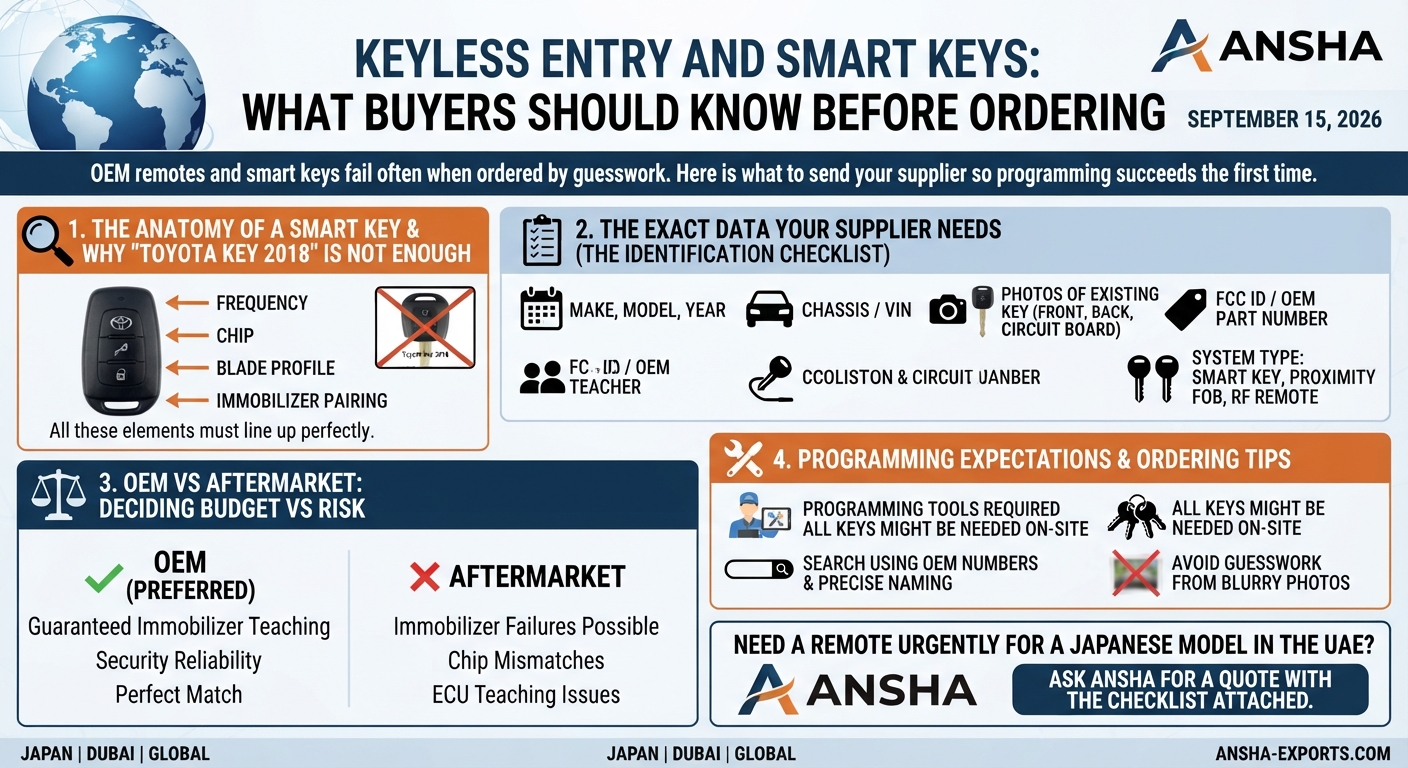
OEM remotes and smart keys look similar in photos and behave very differently in the workshop. Frequency, chip, blade profile, and immobilizer pairing all have to line up. That is why "Toyota key 2018" is not a complete order.
If you buy keyless parts through Dubai or Japan stock channels, treat identification as part of the product.
Send these details with every key or remote request
- Make, model, and year (and generation if you know it)
- Chassis / VIN when possible
- Photos of the existing key (front, back, and circuit board if opened by a locksmith)
- FCC ID / OEM part number printed on the remote
- Whether the car uses a smart key, proximity fob, or simple RF remote
Why aftermarket keys disappoint
Some aftermarket remotes never complete immobilizer teaching on certain ECUs. Others match the button layout but not the chip. For security-related parts, many workshops prefer OEM or used OEM pulled from the same model family.
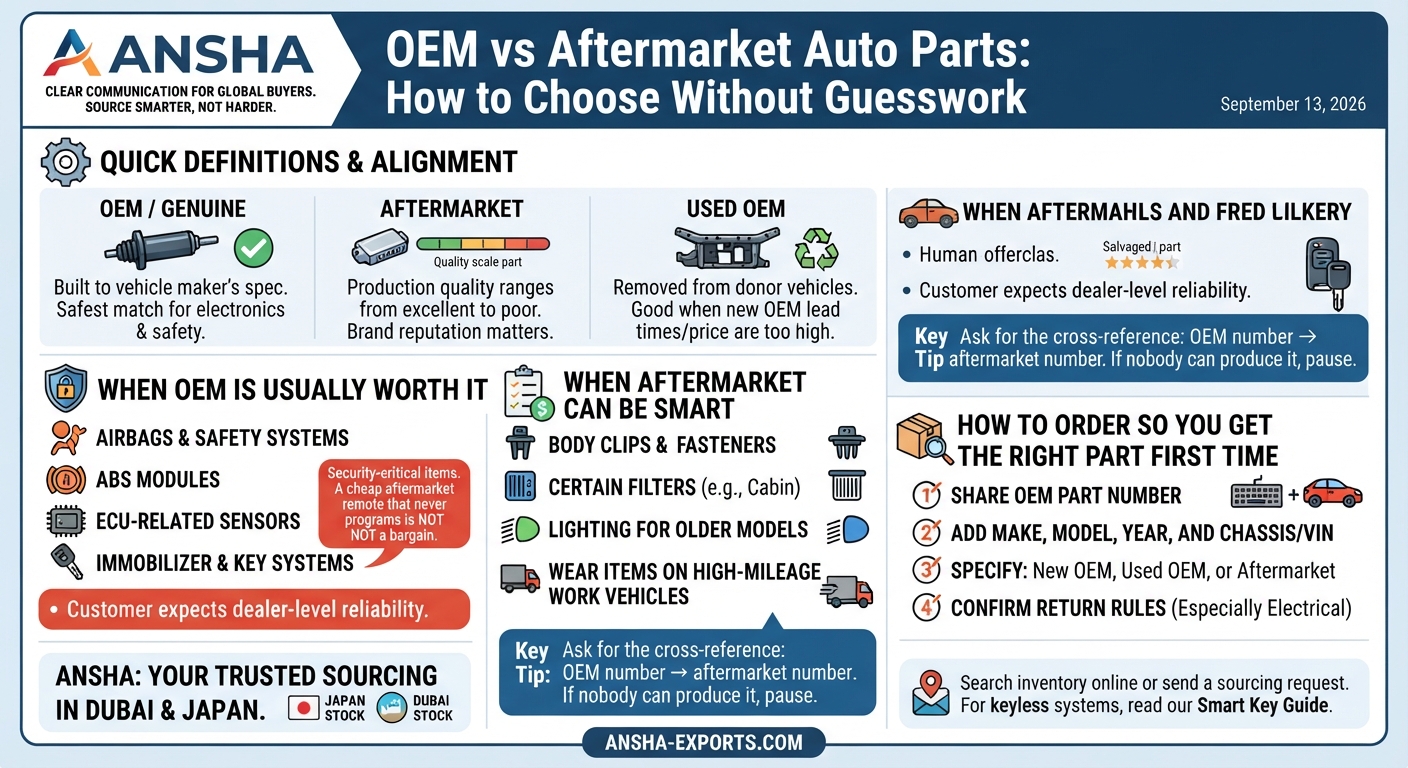
Read our broader take on OEM vs aftermarket if you are deciding budget vs risk.
Programming expectations
A correct remote still needs programming tools and, for some models, all existing keys present. Confirm with your locksmith before you promise a same-day drive-away to a retail customer.
Stock search tip
When you browse our auto parts inventory, use OEM numbers and precise model naming. If nothing matches, send a part request — guessing from a blurry WhatsApp photo is how wrong keys get shipped.
Need a remote urgently for a Japanese model in the UAE? Ask ANSHA for a quote with the checklist above attached.