Why Make, Model, Year, and Color Naming Matters in Stock Search
Messy naming wastes days in export trade. Here is how precise Make / Model / Year / Color labels help you find the right vehicle or part faster.
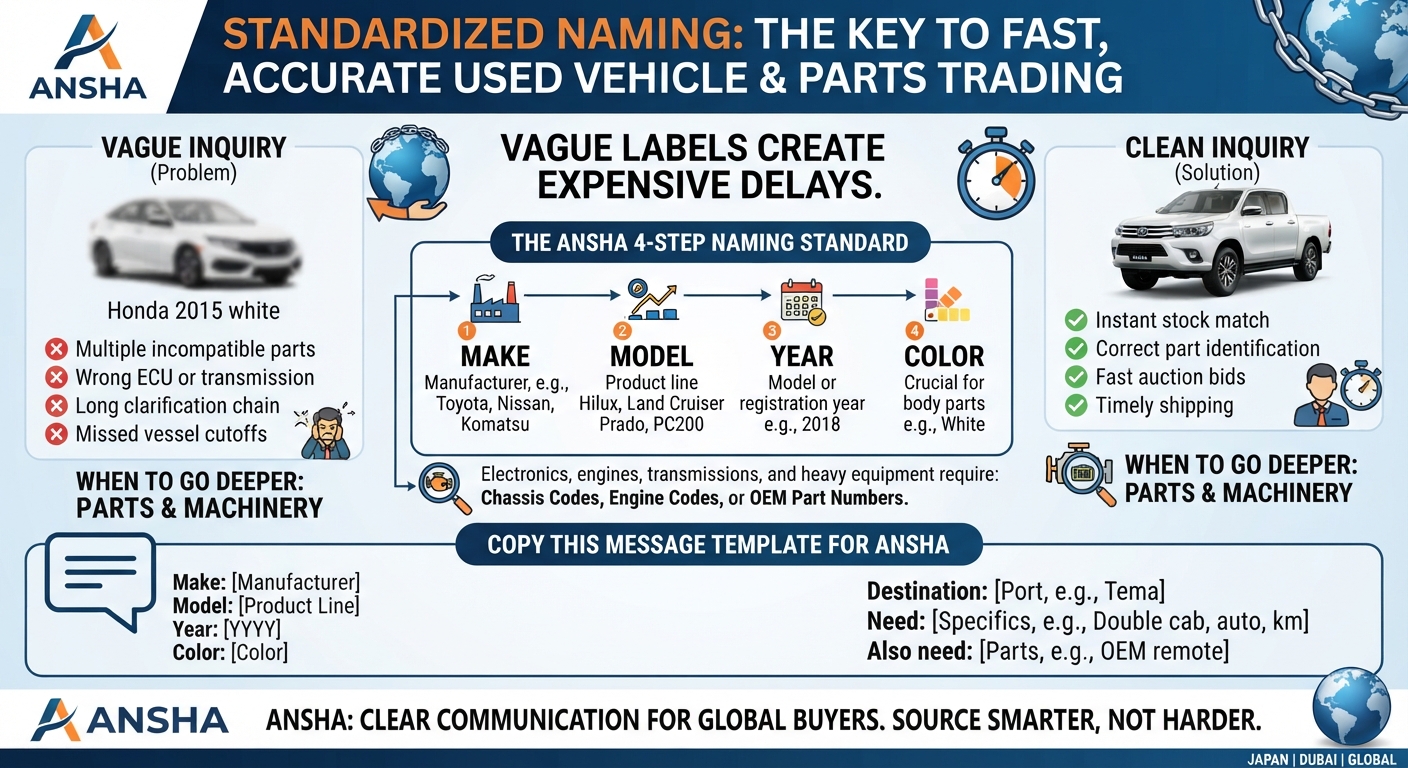
In used vehicle and parts trading, vague labels create expensive delays. "Honda 2015 white" might mean three different cars and a dozen incompatible remotes. That is why serious exporters standardize on Make, Model, Year, Color — and add chassis or OEM numbers when the part demands it.
ANSHA catalog and sourcing workflow lean on that naming so buyers in the UAE, Africa, and other markets can search without decoding slang.
What each field is for
- Make — manufacturer family (Toyota, Nissan, Komatsu).
- Model — the actual product line (Hilux, Land Cruiser Prado, PC200).
- Year — model year or first registration year; say which one you mean.
- Color — useful for body parts, mirrors, bumpers, and retail presentation.
When you must go deeper than color
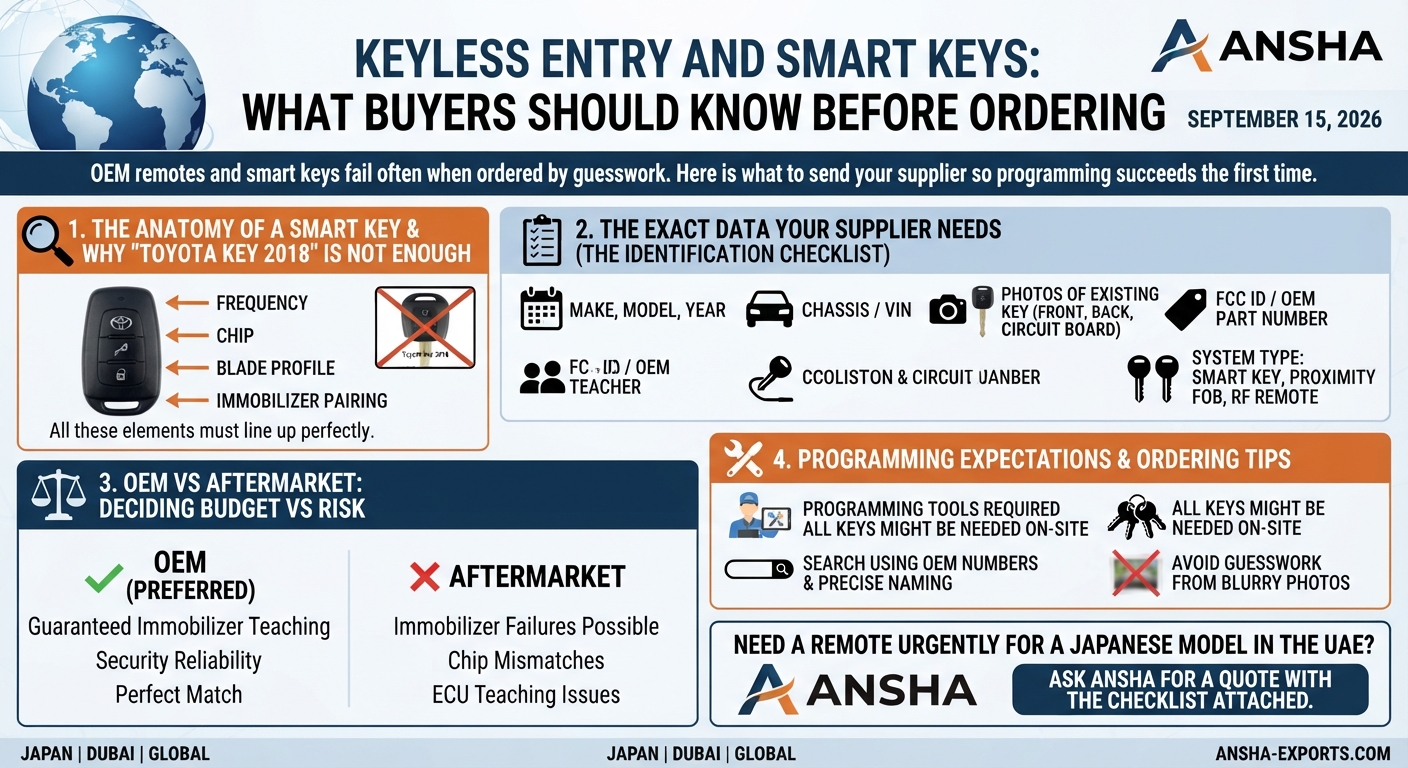
Electronics, engines, and transmissions need chassis codes, engine codes, or OEM part numbers. Color will not save a wrong ECU. For remotes, see our smart key guide.
How clean naming speeds Japan and Dubai stock checks
When a buyer sends precise fields, we can match against published vehicles, parts, and machinery without a long clarification chain. That matters when auction windows or vessel cutoffs are tight.
A message template you can copy
Make: Toyota · Model: Hilux · Year: 2018 · Color: White · Destination: Tema · Need: Double cab, automatic, under 100,000 km · Also need: OEM remote if available
Send that structure to ANSHA and you will get a clearer yes/no on stock — which is the point of good naming in the first place.