Sourcing Heavy Machinery and Trucks: What Specs Actually Matter
Hours, undercarriage, attachment fitment, and export readiness — a practical checklist for excavators, loaders, and commercial trucks.
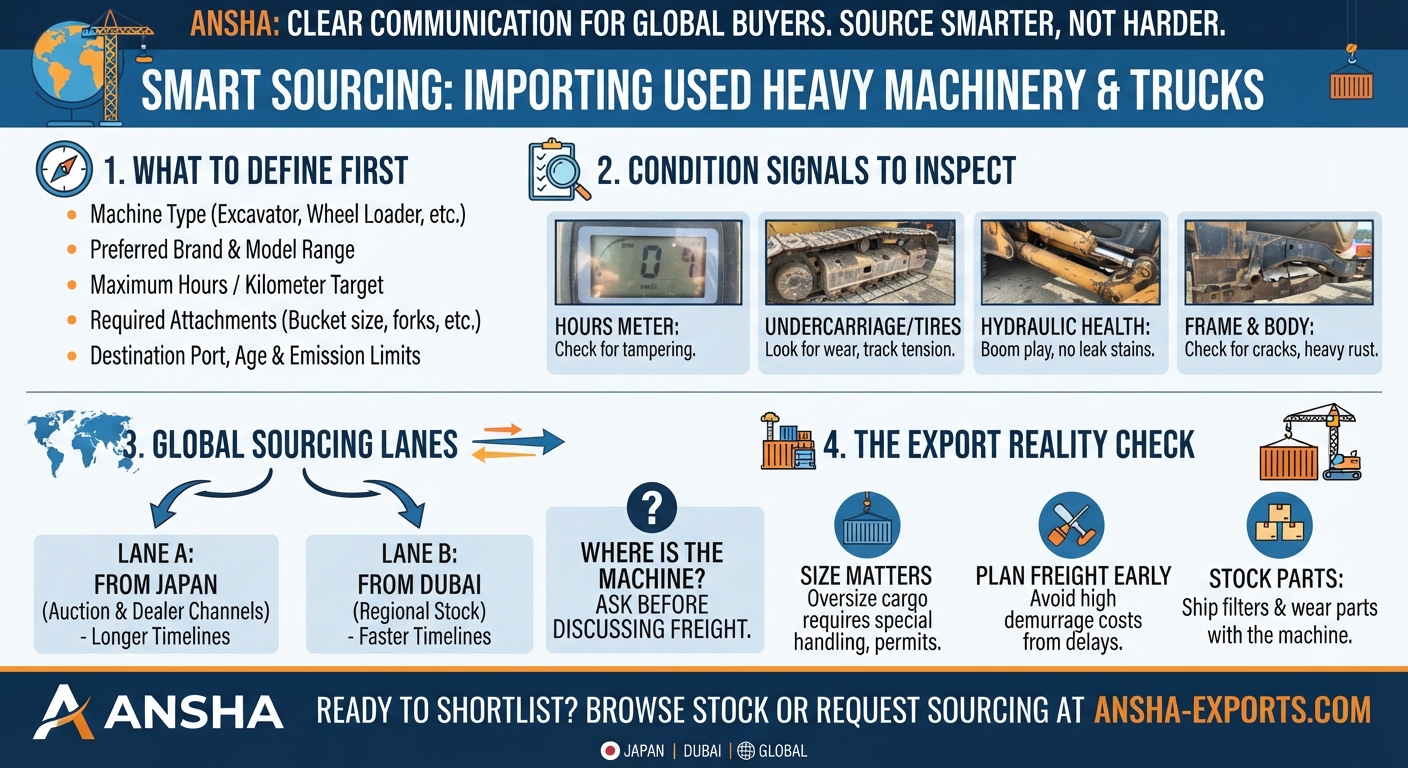
Buying heavy machinery is not the same as buying a passenger car. Hours, undercarriage wear, hydraulic health, and attachment compatibility decide whether the machine works on day one or sits in a yard eating demurrage.
ANSHA lists construction and commercial equipment alongside vehicles — start at machinery & trucks when you know the type you need.
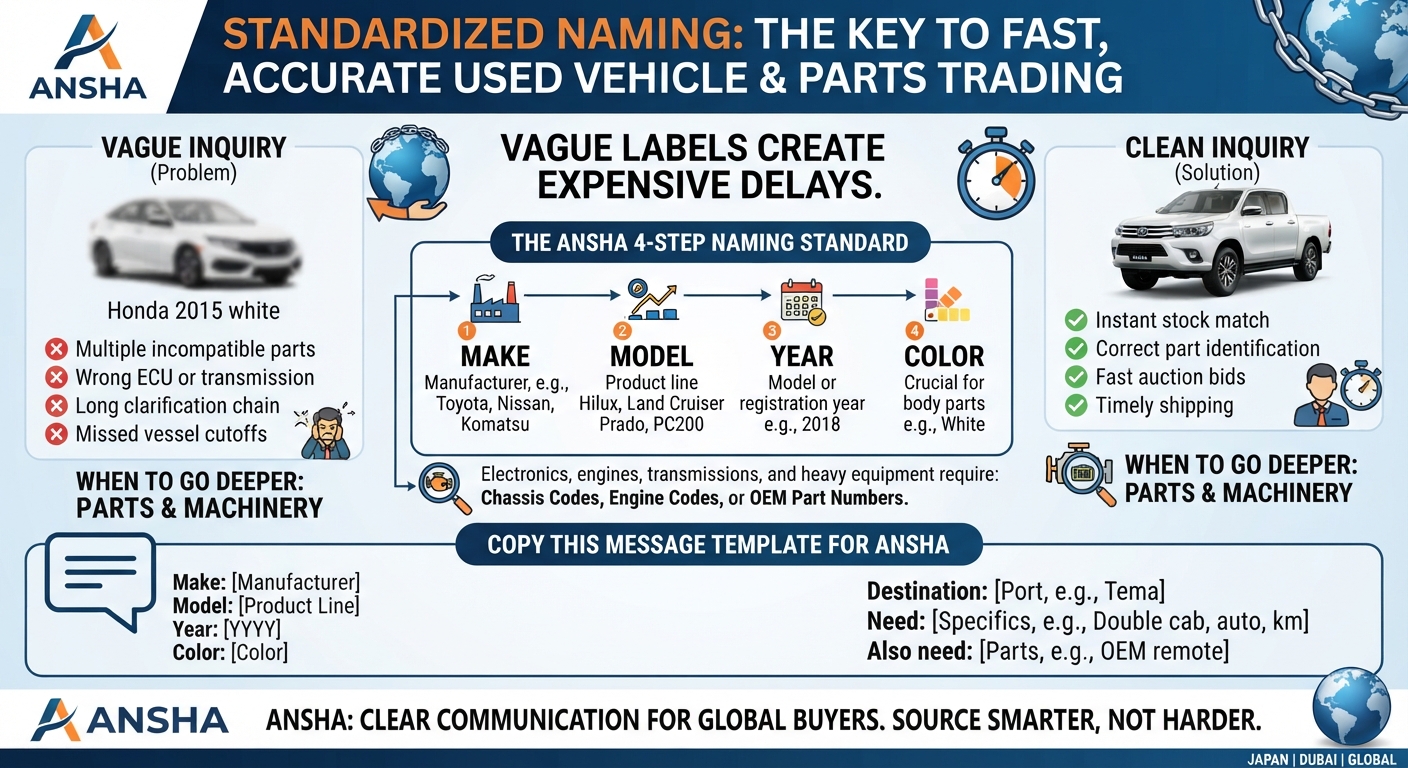
Specs to put in the first message
- Machine type (excavator, wheel loader, dump truck, etc.)
- Preferred brand and model range
- Maximum hours / kilometer target
- Required attachments (bucket size, forks, crane spec)
- Destination port and any age or emission limits
Condition signals that deserve photos
Ask for hours meter shots, undercarriage or tire condition, boom/arm play indicators, cabin interior, and any leak stains. For trucks, check frame rails, bed condition, and engine bay cleanliness as clues — not proof — of care.
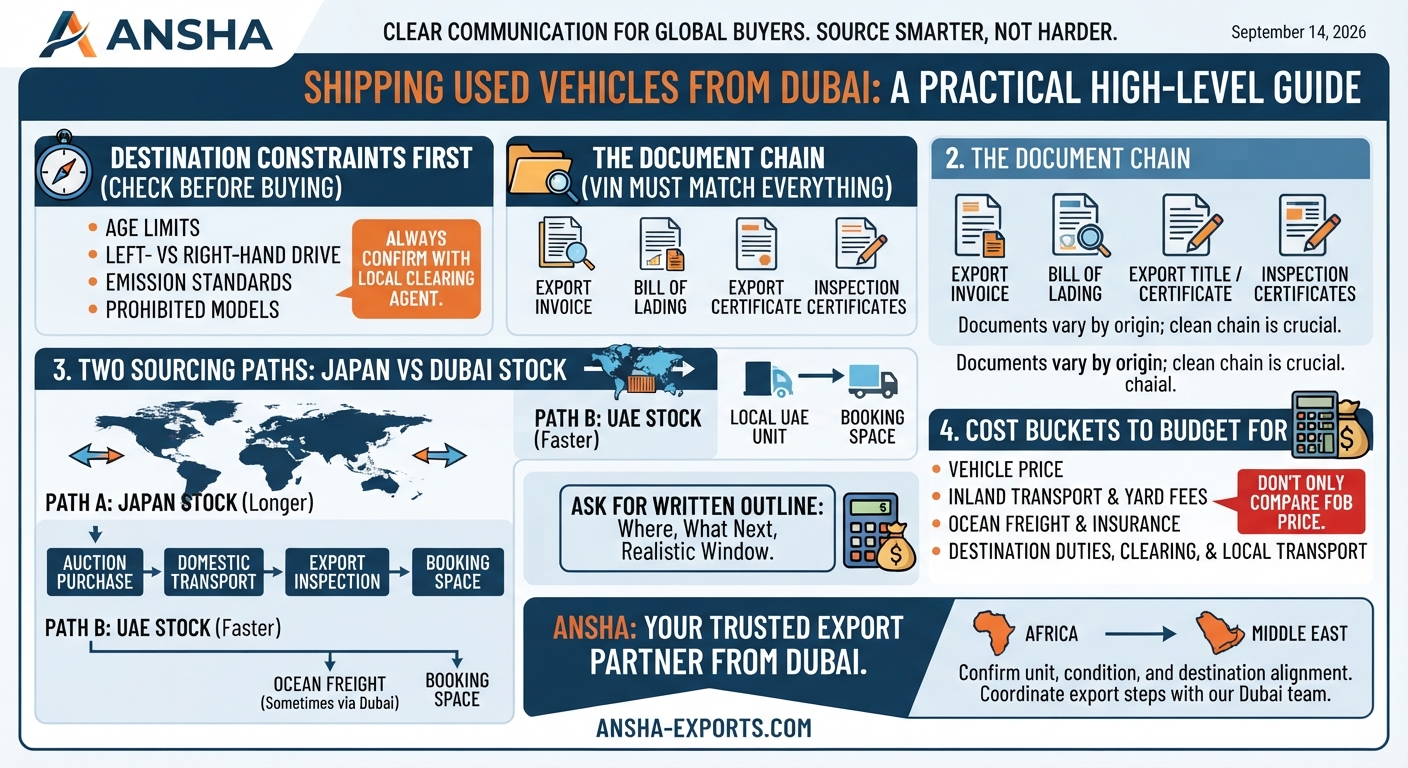
Japan and Dubai sourcing lanes
Some machines move through Japanese used equipment channels; others sit in regional stock. Timelines differ. A clear "where is it now" answer should come before you discuss freight.
Export reality check
Oversize cargo, special lashing, and destination permits can dominate cost. Get a freight indication early for unusual dimensions. Pair machinery purchases with parts planning if you run a remote site — filters and wear parts are easier to ship with the first move when planned.
Ready to shortlist? Browse machinery stock or request sourcing with your hours cap and destination.