Buying Used Cars from Japan: Auction Sheets Explained Simply
Learn what a Japan auction sheet actually tells you — grades, defects, and red flags — before you commit to a used Japanese car for export.
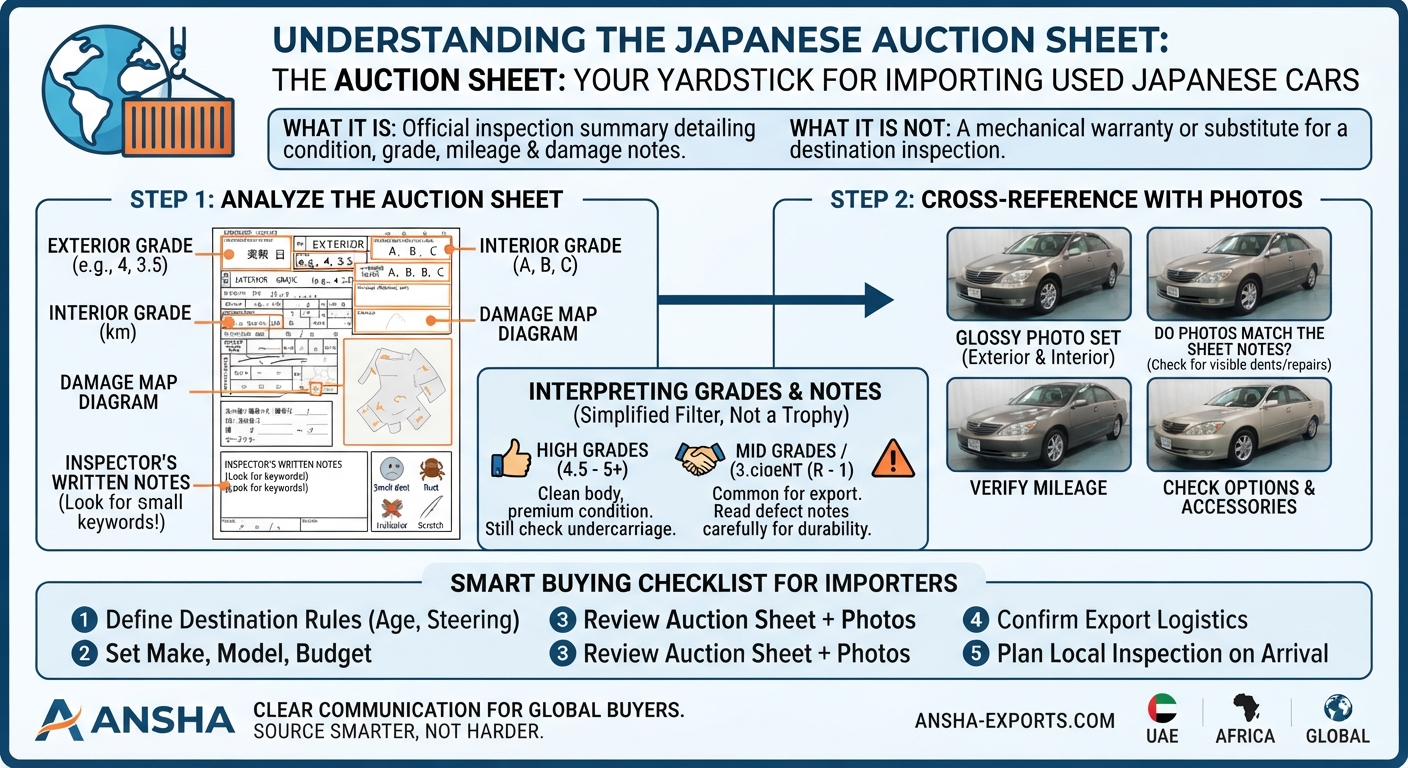
If you are buying used Japanese cars for export, the auction sheet is often more important than a glossy photo set. It is the yard’s shorthand for how the car looked on inspection day — and it is one of the first documents our team checks when sourcing stock for buyers in the UAE, Africa, and beyond.
This guide keeps the jargon practical. You do not need to memorize every code. You need a process that stops you from paying for surprises.
What an auction sheet is (and is not)
A Japan auction sheet is an inspection summary from the auction house: exterior grade, interior grade, mileage reading, options, and written notes about damage or repair. It is not a full mechanical warranty, and it is not a substitute for a post-purchase check at the port or yard.
Treat it as a decision filter. Strong sheet + clear photos = proceed. Vague notes + missing panels in photos = ask more questions or walk away.
Grades: use them as a filter, not a trophy
Auction grades vary slightly by house, but the idea is consistent: higher grades mean cleaner body and interior condition. A mid-grade car with honest notes can still be the right buy for a destination market that prices durability over showroom shine.
- Higher grades — usually fewer body issues; still verify undercarriage photos if available.
- Mid grades — common for export; read the defect notes carefully.
- Lower grades / accident flags — only if you understand repair cost in your market.
Notes and abbreviations that actually matter
The free-text notes are where serious issues hide: replaced panels, rust, airbag deployment history, flood indicators, or mismatched odometer comments. If a note is unclear, ask the exporter to interpret it against the photos before you lock a bid or purchase.
Also confirm whether the sheet mileage matches what you expect for that model year. Large gaps deserve an explanation.
Photos vs sheet: do not skip either
Sheets miss context. Photos miss measurement. Cross-check: if the sheet mentions a dent on the rear quarter, you should see it (or a repair) in images. If photos look perfect but the sheet lists multiple panel issues, ask why.
A simple buying checklist for importers
- Decide destination rules early (age, steering, emissions, left/right hand drive).
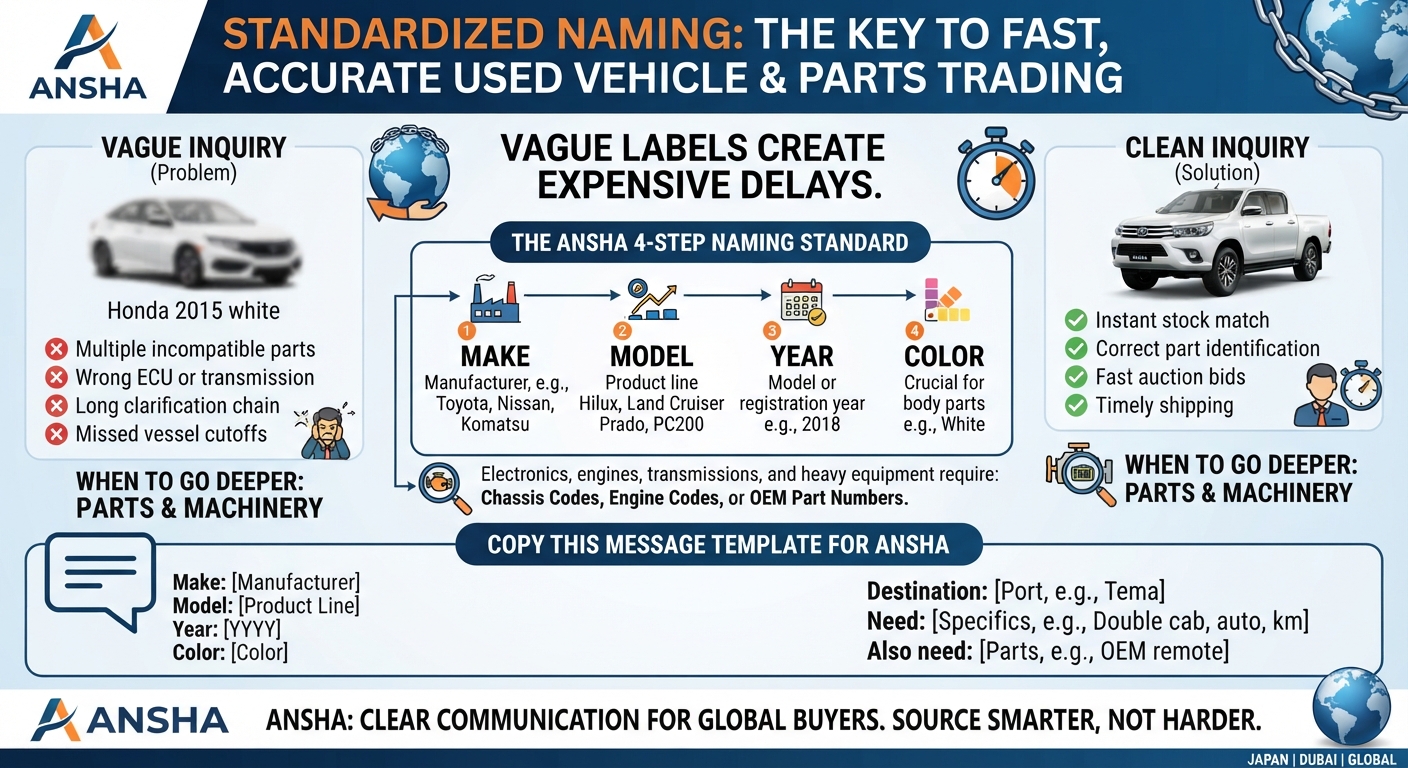
- Lock make, model, year range, engine, and budget — then search vehicle stock.
- Review auction sheet + photos together.
- Confirm export timeline and documents with your trader.
- Plan a local inspection on arrival before retail resale.
ANSHA helps buyers source used Japanese cars and related stock with clear condition communication — not hype. Browse current vehicles or ask for a quote with your make, model, year, and destination.